Digital Forensics
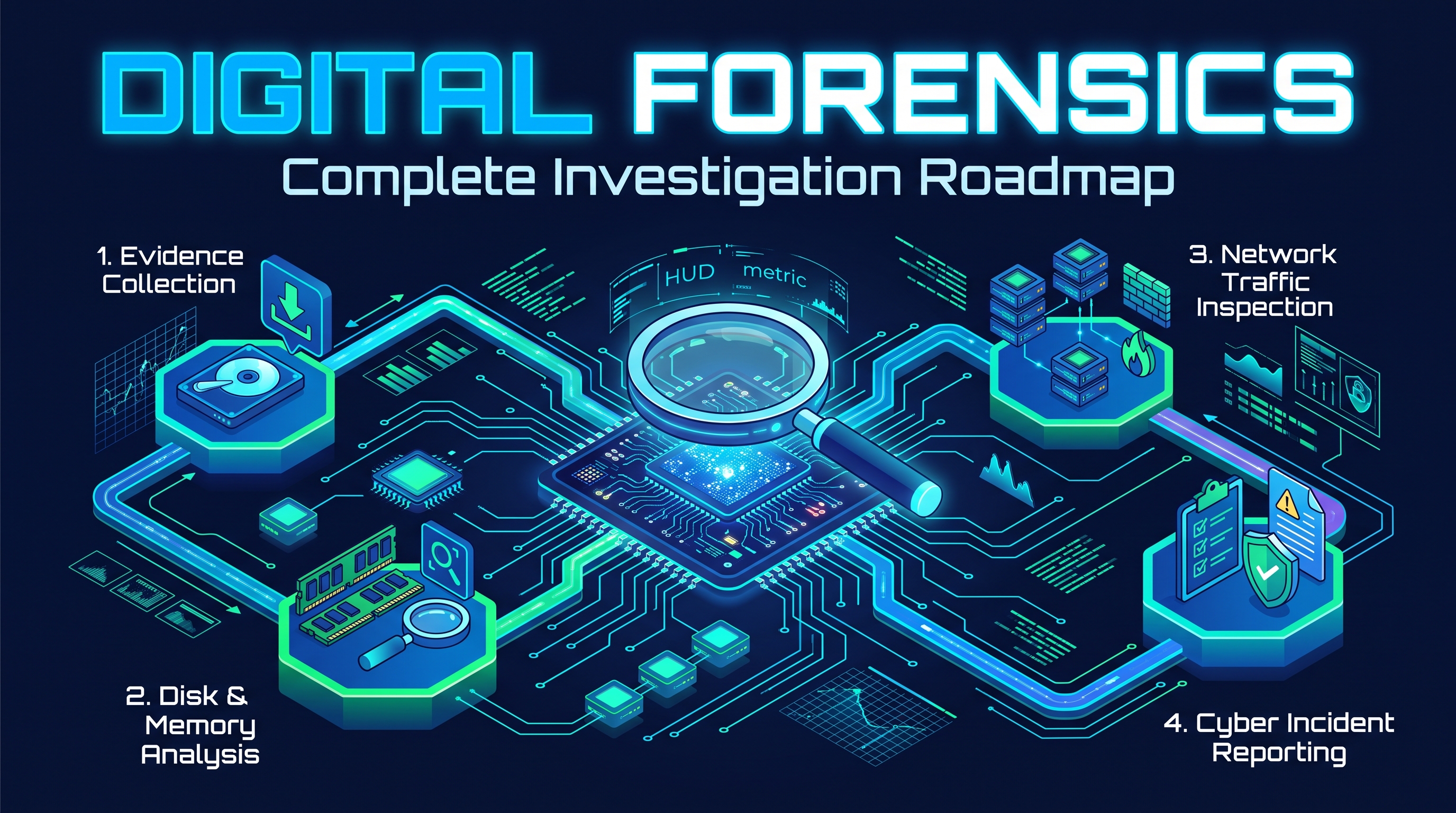
An advanced, 12-week, hands-on course in digital forensics. Trainees investigate cybercrimes, recover digital evidence, and present findings under Pakistani legal procedures, using KP case scenarios.
 AWKUM
Course Introduction
Learning Outcomes
Apply digital forensics principles within Pakistan's legal framework (PECA 2016, Evidence Act) and maintain chain of custody
Perform forensic imaging, live memory capture, and data carving with open-source and commercial tools
Analyze Windows, Linux, Android, and cloud artifacts in common KP cybercrime scenarios
Use Autopsy, FTK Imager, Volatility, Wireshark, and MOBILedit through scaffolded labs
Investigate emails, logs, malware, and network intrusions using local datasets
Document findings professionally and present evidence in simulated court scenarios
Build a forensics portfolio of KP case studies for freelancing or employment
Prepare for GCFA, CHFI, and EnCase certifications with practice exams
Target Audience
- group ICT graduates
- group Early-career cybersecurity professionals
- group Freelancers interested in cybercrime analysis
- group Learners aiming for law enforcement or CERT roles (such as FIA and CERT-PK)
- group Learners with a basic understanding of operating systems, file systems, and networking
- group Women (the curriculum includes women's-safety scenarios and female mentors)
Certification Criteria
- check Minimum 80% attendance
- check Completion of all practical assignments
- check Minimum 60% overall score
- check Successful capstone defence
Assessment Strategy
12 weeks Duration.
Course Modules
12 modules · 4 sessions per week · 144 contact hours
Computer Forensics Fundamentals
PECA 2016, forensic readiness, chain of custody, digital evidence, forensic workstation (Week 1)
Forensic Investigation Process
Pre-investigation, investigation, and post-investigation phases across evidence and acquisition sessions (Weeks 1–2)
Hard Disks & File Systems
NTFS, FAT, EXT4, MBR/GPT, file carving, metadata and timeline analysis (Week 2)
Data Acquisition & Duplication
Live, static, logical, and physical acquisition; E01, RAW, and AFF formats; hash verification (Week 2)
Defeating Anti-Forensics
Obfuscation, encryption, steganography, ethical decryption, countermeasures (Week 7)
Windows Forensics
Registry, prefetch, event logs, MFT, browser forensics (Weeks 3–4)
Linux & Mac Forensics
Bash history, Sleuth Kit, memory forensics with Volatility, Mac specifics (Weeks 3–4)
Network Forensics
Packet capture, log correlation, IoCs, cloud logs (AWS, Google, Microsoft 365) (Week 6)
Investigating Web Attacks
IIS and Apache logs, SQL injection, XSS, Windows server attacks (Week 8)
Dark Web Forensics
Tor Browser artifacts, onion services, investigation methodology (Week 8)
Investigating Email Crimes
Email headers, MBOX/PST, phishing investigation (Week 4)
Malware Forensics
Static and dynamic analysis, malicious documents, sandboxing, network behavior (Weeks 7 and 9)
Forensic Tools
Acquisition & Disk Analysis: FTK Imager, dd, Guymager, Autopsy, TestDisk, PhotoRec, Sleuth Kit, ExifTool
Windows, Memory & Email: Registry Explorer, MFT Parser, Event Log Explorer, Volatility, Rekall, MBOX Viewer, eMailTrackerPro, Hindsight
Mobile Forensics: MOBILedit, ADB, DB Browser, iMazing, iExplorer
Network, Web & Cloud: Wireshark, TCPDump, NetworkMiner, Kibana, Splunk (demo), Burp Suite, OWASP ZAP, AWS CloudTrail, Google Admin Console
Malware & Anti-Forensics: PEStudio, YARA, Cuckoo Sandbox, oletools, INetSim, Steghide, Binwalk, VeraCrypt, Hashcat (demo)
Delivery & Careers: VirtualBox, Excel, LMS, Upwork, Fiverr, LinkedIn
Hands-On Industry Capstone Project
Apply what you master into a comprehensive, real-world portfolio project evaluated by industry professionals.
Project Scope & Problem Statement
Trainees pick a KP-relevant cybercrime scenario and run a full investigation using multiple modules. They acquire and document evidence, analyze artifacts, reconstruct a timeline, write an investigation report, and present it to a panel in Week 12. Themes include a Fake University Admission Scam, Social Media Impersonation, Fake Mobile Banking App, E-commerce Data Breach, Freelancer Account Hijacking, Patient Data Leak at a Clinic, Dark Web Listing Investigation, Malicious Document Attack on an NGO, and Web Attack on a Local Portal.
Required Deliverables & Key Outcomes
Case file with acquired evidence and chain of custody
Artifact analysis with screenshots and notes
Multi-source visual timeline
Investigation report with executive summary, methodology, findings, and conclusions
Mock testimony and peer review
Live capstone presentation (10 minutes, with a tool demo)
Ready to lead the Digital Revolution?
Join the next cohort and master the technologies shaping the future of global enterprise.